Pertamina considers Nigeria’s 2026 oil licensing round
By Uka_Chimaobi_Uduma
September 20, 2026 • 3 mins read
Pertamina considers Nigeria’s 2026 oil licensing round
Indonesia’s state-owned oil company, Pertamina, is considering investment opportunities in Nigeria’s upstream oil and gas sector, including producing assets and projects approaching final investment decisions.
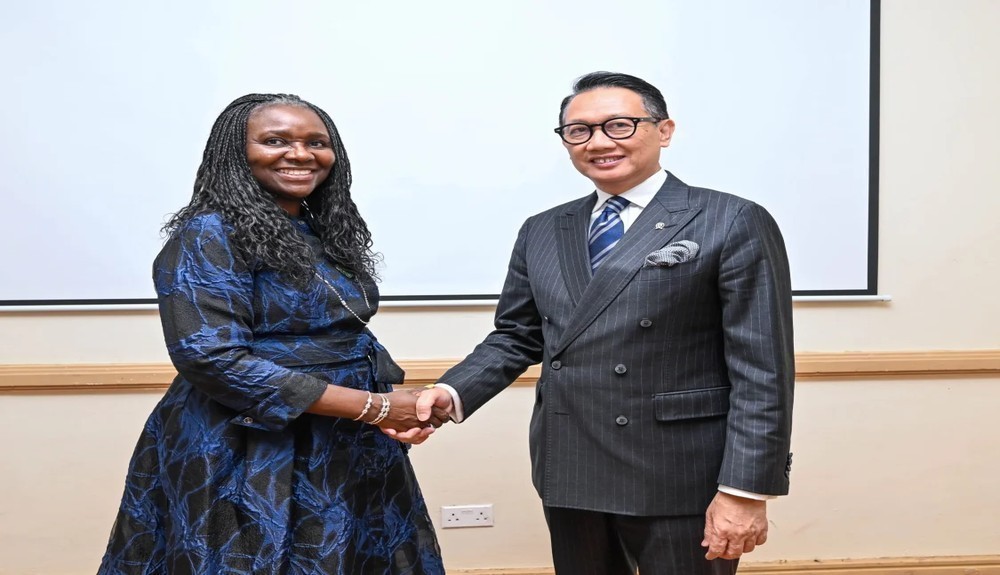
The development followed discussions involving the Chief Executive of the Nigerian Upstream Petroleum Regulatory Commission, NUPRC, Mrs Oritsemeyiwa Eyesan; Indonesia’s Vice Minister of Foreign Affairs, Arif Oegroseno; and Pertamina’s Vice-President, Upstream Business Development, Toriq Abdat.
The discussions focused on investment opportunities in Nigeria and broader cooperation between both countries, particularly efforts to strengthen energy security and increase oil production.
According to a statement issued by NUPRC Head of Corporate Communications and Media, Eniola Akinkuotu, on Sunday, Eyesan said Nigeria and Indonesia shared similar priorities in areas including energy security, resource utilisation and attracting investment into the sector.
The discussions took place as both countries seek to raise crude oil production. Nigeria is targeting three million barrels per day by 2030, compared with current production of about 1.6 million to 1.7 million barrels per day.
Indonesia, which produces roughly 600,000 barrels per day, is also seeking to increase output and has been looking beyond its domestic fields to meet its energy needs.
The NUPRC said Pertamina had expressed interest in Nigeria’s upcoming 2026 licensing round as part of its international expansion plans.
Abdat explained that declining domestic production and changes in the nature of discoveries had encouraged the Indonesian company to pursue opportunities in other countries.
“We have been given a mandate to expand our business internationally; we are now in other countries outside Indonesia. In Indonesia, we are producing only around 600,000 barrels. We are working on exploration towards deepwater, but we found more gas than oil. That is why we go outside Indonesia, Malaysia, then the Middle East, Iraq and Nigeria,” he said.
According to Abdat, Pertamina is particularly interested in projects capable of delivering production within a relatively short period, including existing producing fields and developments close to production.
“We would like to be in projects with governments. Producing assets, or near production, or before FID. Now we are looking at how we can help you reach the 3 million, and also help us provide more energy for our own consumption,” he said.
Responding, Eyesan said Nigeria also had an ambitious production target and was using licensing rounds as one of the strategies to attract investment and increase output.
“We have very aggressive targets, 3 million barrels per day by 2030, and today we are at 1.6, 1.7. We are committed to the objective and the licensing round is one of the strategies we are utilising,” she said.
The NUPRC has increasingly promoted licensing rounds as a regular means of providing investors with access to new acreage.
The commission said its latest licensing round attracted about 300 companies for 50 available assets, with 196 applicants qualifying for the bidding stage. At the conclusion of bidding, 143 companies submitted 200 bids covering 37 assets.
The NUPRC later announced 31 successful companies for 37 oil and gas blocks, while 13 of the 50 blocks offered received no bids.
The available blocks covered onshore, shallow-water, deep offshore and frontier areas, including the Benue Trough, Chad Basin, Anambra Basin and Benin Basin.
The commission has also stated that Nigeria’s acreage administration will continue to provide investors with predictable and periodic access to opportunities in the upstream sector.
Beyond crude oil and natural gas, the Indonesian delegation indicated that it was exploring opportunities in other areas, including fertiliser production.
The delegation said Pertamina was developing a fertiliser plant to reduce Indonesia’s dependence on supplies from the Middle East amid disruptions linked to the ongoing global conflict.
It also highlighted the connection between food security and the oil and gas industry, particularly through the use of phosphate and other elements required for fertiliser production.
Nigeria is also seeking to diversify its sources of phosphate, including through a proposed long-term transatlantic supply project with Morocco for the West African market.
The two sides agreed to continue discussions on both the commercial and diplomatic aspects of their cooperation.