Reps move to provide legal backing for Nigeria’s decarbonisation plan
By abiawatch
March 5, 2026 • 2 mins read
Reps move to provide legal backing for Nigeria’s decarbonisation plan
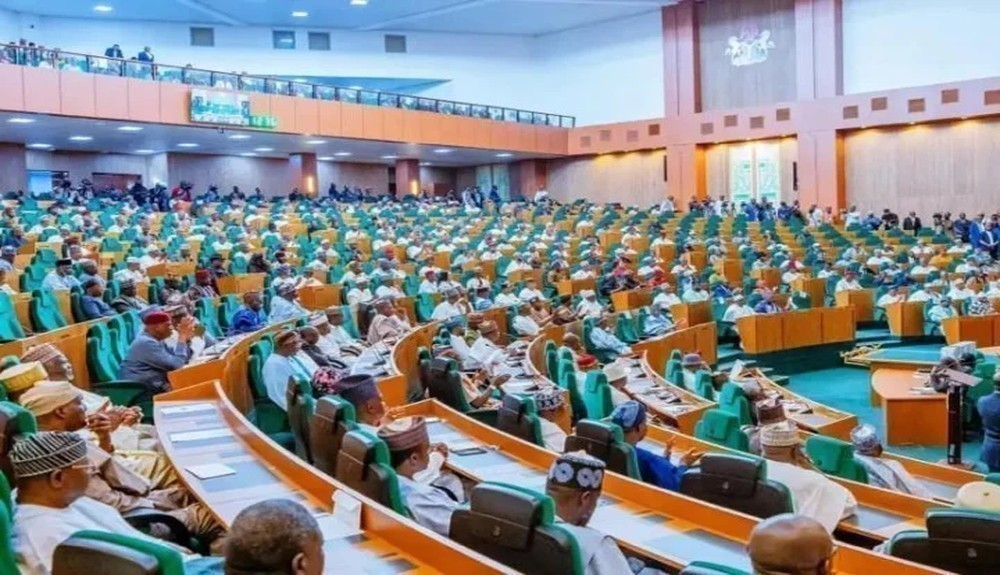
The Chairman of the House Committee on Mandatory National Decarbonisation, Sesi Whingan, disclosed this on Thursday while briefing journalists after a technical roundtable with stakeholders in Abuja.
Whingan explained that although Nigeria operates under the Climate Change Act, the proposed National Decarbonisation Bill seeks to reinforce existing policies and create a more coordinated legal structure for the country’s climate transition.
According to him, the bill has passed first and second readings in the Green Chamber and is expected to proceed to public hearing before the end of the month.
“This bill is designed to complement what the National Council on Climate Change is already doing. It has already gone through the first and second readings in the House, and hopefully, before the end of the month, we will move towards the public hearing stage,” Whingan said.
He noted that the legislation would strengthen the work of the National Council on Climate Change while harmonising various emission-reduction and energy transition initiatives across key sectors of the economy.
The roundtable, he added, brought together stakeholders from the organised private sector, oil and gas industry, environmental advocacy groups, energy experts, and climate governance actors at federal and state levels.
Whingan stressed that clear policies and sustainable financing are essential for Nigeria’s decarbonisation agenda, noting that investors require a stable and predictable regulatory environment before committing long-term capital to clean energy and low-carbon technologies.
“We all agreed that there is a need for strong collaboration between the executive and the legislature so that investors, both within and outside the country, can clearly understand the direction Nigeria is taking in its decarbonisation efforts,” he said.
To broaden engagement, the committee plans to convene a National Carbon Summit in June, bringing together representatives from the 36 states and 774 local government areas to discuss practical implementation strategies without undermining economic growth.
Nigeria’s decarbonisation push aligns with its commitments under the Paris Agreement. At COP26, the country pledged to achieve net-zero carbon emissions by 2060 — a target reflected in its Energy Transition Plan and the Climate Change Act enacted in 2021.
The transition strategy focuses on cutting emissions from major sectors including power, transportation, oil and gas, agriculture and industry, while expanding renewable energy and improving efficiency.
However, experts have identified the absence of a dedicated legislative framework on decarbonisation as a significant gap in Nigeria’s climate governance structure. The proposed National Decarbonisation Bill is therefore expected to provide clearer legal backing for emission-reduction targets, align existing policies, and create a predictable regulatory environment capable of attracting climate-focused investments.