Saleh Mamman’s Conviction Signals a Rare Victory in Nigeria’s Fight Against Corruption
By abiawatch
June 4, 2026 • 4 mins read
Saleh Mamman’s Conviction Signals a Rare Victory in Nigeria’s Fight Against Corruption
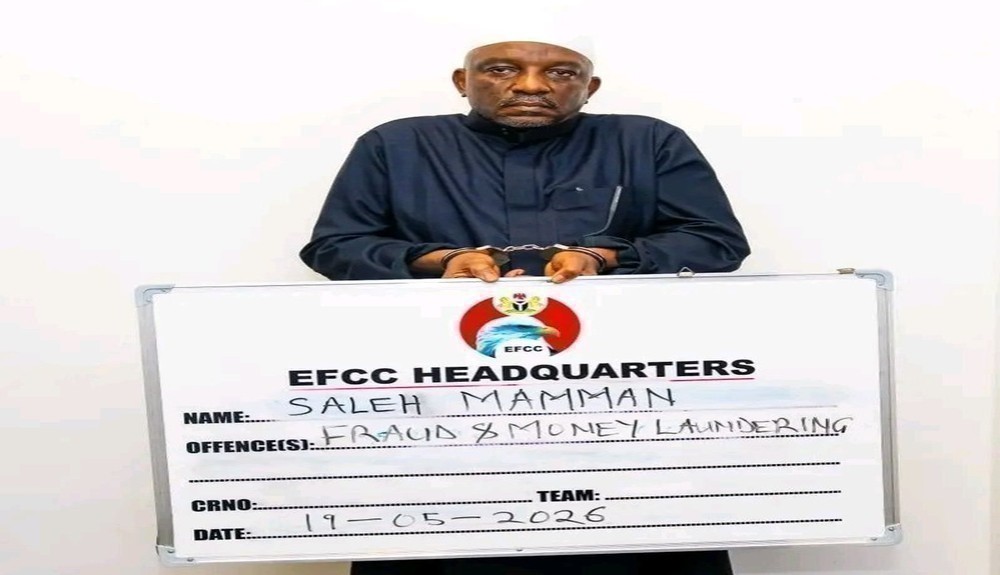
The image of former Minister of Power, Saleh Mamman, being led into prison in handcuffs after his conviction for diverting funds meant for Nigeria’s power sector has become a powerful symbol of accountability in a country long plagued by high-level corruption.
For many Nigerians, the moment represented more than personal disgrace. It served as a rare reminder that public officials can be held responsible for their actions, regardless of their status or influence.
On May 13, a Federal High Court in Abuja sentenced Mamman to a cumulative 75 years in prison and ordered him to repay N22 billion after finding him guilty of fraud and money laundering involving N33.8 billion earmarked for the Mambilla and Zungeru hydroelectric projects. The projects are considered vital to improving electricity supply and supporting economic growth across the country.
The conviction has drawn attention because the funds involved were intended for a sector that remains central to Nigeria’s development. For years, millions of citizens have struggled with unreliable electricity, rising energy costs, and the economic consequences of inadequate power supply. The diversion of resources meant to address these challenges has therefore been viewed as particularly damaging.
The case also generated further controversy following reports that Mamman attempted to evade justice after his conviction. Rather than immediately complying with the judicial process, he reportedly left Abuja for Kaduna before being arrested on May 19.
Court proceedings indicated that he had been staying in a rented apartment in Rigasa while citing health concerns. His actions have been widely interpreted as an attempt to avoid serving his sentence, further fueling public criticism.
The development has also reignited debate about accountability among Nigeria’s political elite. Critics argue that many politicians often project an image of invincibility while in office, yet seek to avoid responsibility when confronted with legal consequences.
Questions have also been raised over reports that Mamman pursued the governorship ticket of the ruling APC in Taraba State despite facing serious corruption allegations. Observers say the situation reflects a political culture in which individuals accused of large-scale financial misconduct can still seek and obtain political opportunities.
Analysts note that in many countries, allegations of such magnitude would severely damage a politician’s public career. In Nigeria, however, individuals facing corruption charges frequently remain active in politics, maintain influence within party structures, and continue to seek elective positions.
This trend, critics argue, has contributed significantly to the country’s governance challenges. Corruption has been blamed for weakening institutions, worsening poverty, limiting infrastructure development, and eroding public trust in government.
While essential services such as education, healthcare, and transportation continue to face difficulties, allegations of illicit wealth accumulation among public officials remain a recurring concern. This has contributed to growing frustration among citizens and declining confidence in public institutions.
The concerns are reflected in international assessments. Nigeria ranked 142nd out of 182 countries in Transparency International’s latest Corruption Perceptions Index, scoring 26 out of 100 points, a figure that remains below the global average.
Many observers believe corruption has become deeply rooted within several public institutions, with allegations of contract inflation, procurement fraud, ghost projects, and payroll manipulation frequently surfacing across government agencies.
Against this backdrop, the Economic and Financial Crimes Commission (EFCC) has received praise for securing Mamman’s conviction. Supporters of the anti-graft agency argue that the judgment sends an important message that occupying public office does not guarantee permanent protection from prosecution.
The severity of the sentence has also attracted attention. Given Mamman’s age, many believe the ruling effectively means he could spend the remainder of his life in prison, making it one of the most significant corruption-related penalties in recent years.
There are growing calls for the judiciary to maintain a firm stance in corruption cases and for anti-corruption agencies to pursue other high-profile investigations with equal determination. Pending cases involving former Central Bank Governor Godwin Emefiele, former Humanitarian Affairs Minister Sadiya Umar Farouq, former Kogi State Governor Yahaya Bello, and former Accountant-General of the Federation Ahmed Idris remain under close public scrutiny.
At the same time, concerns persist over allegations that anti-corruption efforts are sometimes influenced by political considerations. Observers argue that the credibility of the fight against corruption depends on ensuring that investigations and prosecutions are carried out fairly, regardless of political affiliation or status.
Experts have also urged greater scrutiny of Ministries, Departments, and Agencies, many of which have repeatedly faced allegations of financial misconduct. They maintain that meaningful national development will remain difficult if public institutions continue to be vulnerable to corruption.
Several countries, including Singapore, Denmark, Norway, Sweden, the Netherlands, and Germany, are often cited as examples of how strong institutions, strict enforcement, and political commitment can significantly reduce corruption.
Nigeria has previously taken steps to strengthen its anti-corruption framework through the establishment of the Independent Corrupt Practices and Other Related Offences Commission (ICPC) in 2000 and the EFCC in 2003. However, debates continue over the overall effectiveness of these institutions.
The anti-corruption campaign also faced criticism in 2022 when former President Muhammadu Buhari granted pardons to two former governors convicted of corruption, a move some observers argued weakened public confidence in accountability efforts.
Ultimately, the conviction of Saleh Mamman is being viewed as more than the downfall of a former minister. For many Nigerians, it represents a test of the country's commitment to fighting corruption and ensuring that public office is used for service rather than personal enrichment.
Supporters of tougher anti-corruption measures argue that sustained and consistent accountability, regardless of political influence, remains essential if Nigeria is to strengthen public trust, improve governance, and achieve meaningful development.