China, India prove mother-tongue teaching works – Otti
By Sir_Chima_Uduma
September 24, 2026 • 3 mins read
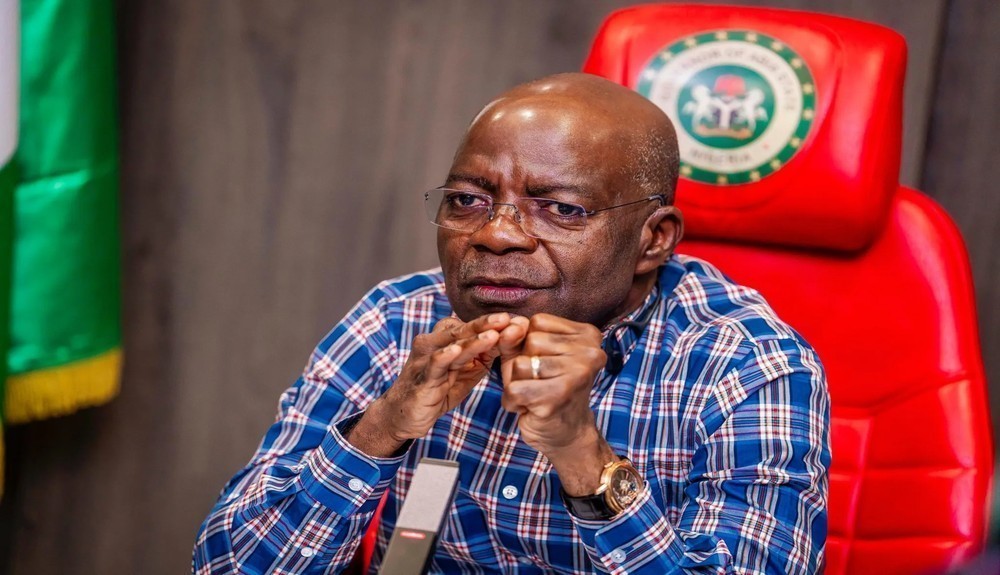
Abia State Governor, Alex Otti, has said Nigeria can draw lessons from China, India and South Korea, where indigenous languages are used in early education without preventing educational, economic and technological development.
Otti spoke on Wednesday at the 24th Annual Lecture/Symposium of the Fafunwa Educational Foundation and the 19th Annual Post-Doctoral Awards in Education at the MUSON Centre, Onikan, Lagos.
The governor said fears surrounding the use of indigenous languages as the medium of instruction at the early stages of education should be examined alongside evidence from countries where mother-tongue education has been implemented.
He said research had indicated that children learn better when taught in languages they understand, urging policymakers to address the practical challenges of indigenous-language education rather than dismiss the approach.
“The fears, I have to admit, are real, but we may also have to look at a few countries where early education is driven by indigenous languages, including South Korea, India and China,” Otti said.
He argued that experiences from those countries could provide useful perspectives on the relationship between indigenous-language education and their economic and technological development.
Otti also acknowledged challenges such as inadequate teachers who are fluent in indigenous languages and the limited relevance of some languages beyond particular communities or regions.
He praised the Fafunwa Educational Foundation for sustaining the legacy of research associated with the late Professor Aliu Babatunde Fafunwa, particularly findings on the effectiveness of indigenous-language instruction in early education.
The governor said research findings should be examined objectively, noting that identified limitations should be addressed rather than used as a reason to dismiss the evidence.
His comments come amid the Federal Government’s shift in its language-in-education policy. In 2025, the Federal Government announced that English would be used as the language of instruction across Nigerian schools, replacing the previous policy that emphasised mother tongue or the language of the immediate community in early education.
Speaking as keynote speaker, Professor Francis Egbokhare of the University of Ibadan said Nigeria’s major challenge was not the concept of indigenous-language instruction but the lack of adequate preparation for its implementation.
According to him, teacher training, instructional materials and appropriate assessment systems must be developed to support any policy on mother-tongue education.
“Nigeria’s first challenge is an implementation problem. It’s not simply a conceptualisation problem,” Egbokhare said.
He said policymakers needed to determine which language children would learn most effectively in, how teachers should handle situations where their language differs from that of pupils, and how both teachers and learners would be assessed.
Egbokhare also raised concerns about the availability of textbooks and other learning materials for subjects such as mathematics, science and technology in indigenous languages.
He cautioned against drawing conclusions about mother-tongue education from isolated academic performance figures, stressing that factors such as teacher quality and availability of learning materials also influence educational outcomes.
“Correlation is not the same as cause. It’s basic statistics,” he said.
The linguist stressed that supporting indigenous languages did not require abandoning English, which he described as necessary, but argued that children should first develop strong cognitive foundations before transitioning to another language.
He also called for better data on Nigeria’s linguistic diversity to guide education policy, noting that language use and bilingualism vary across communities.
Egbokhare further suggested that digital technology and artificial intelligence could help address some of the challenges involved in developing teaching and learning materials in indigenous languages.
He urged Nigerian universities to play a greater role in developing indigenous languages and producing the expertise required to support their use in education.
Permanent Secretary, Lagos State Ministry of Tertiary Education, Adeniran Kasali, also expressed support for the use of mother tongue in early education, saying local content was important to national development.
Guest speaker, Professor Angelina Kioko of the United States International University, Nairobi, noted that code-switching was common in African classrooms, even in settings where mother-tongue instruction was officially required.
Kioko identified inadequate teacher capacity, insufficient instructional materials in indigenous languages and weak policy implementation as major challenges facing mother-tongue education across Africa.
The event also featured discussions involving Prof A. A. Adeyinka of the University of Ibadan, Dr Ebele Okafor of the University of Lagos and Dr Hamisu Aliyu of the Federal College of Education, Abeokuta.
Post-doctoral awards in education were presented to Dr Ogunwole Ayodeji of Lagos State University, Dr Tomi Ogundipe of the University of Ibadan and Dr Ishola Joshua of Ekiti State University, Ado-Ekiti.